
KPI Dashboards for Business Owners: Streamline Reporting and Drive Smarter Decisions

The Challenge of Manual Reporting
As a business owner or manager, you're likely familiar with the frustrations of manual reporting. Collecting data from various sources, updating spreadsheets, and trying to make sense of it all can be time consuming and error prone.
This is where KPI dashboards come into play.
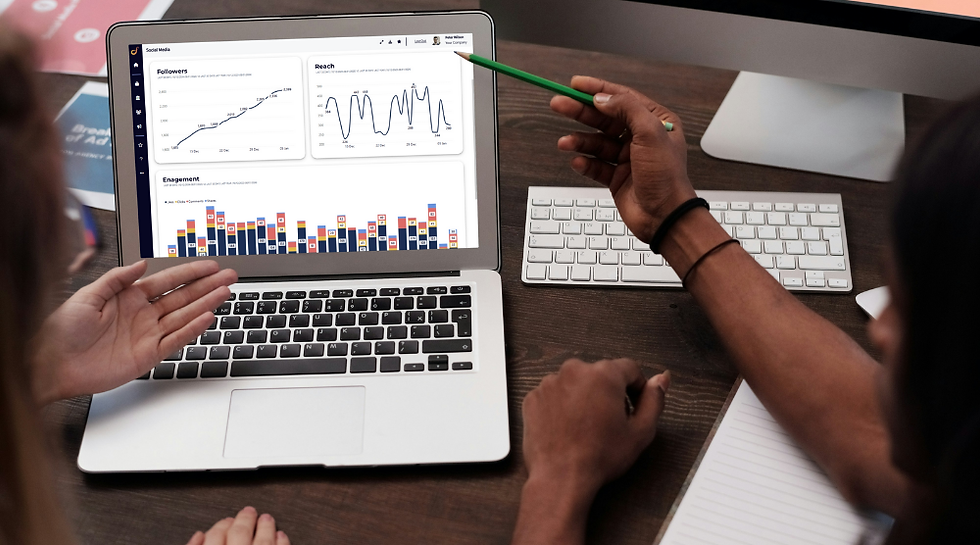
A KPI dashboard is a data visualisation tool that consolidates key performance indicators (KPIs) into a single, interactive interface. It provides real-time insights into your business's performance, allowing you to make informed decisions without the hassle of manual reporting.
What Is a KPI Dashboard?
A KPI dashboard is a centralised place that displays critical business metrics in an easy-to-understand format. Unlike traditional spreadsheet based reports that may be static and difficult to interpret, KPI dashboards offer dynamic visualisations such as charts, graphs, and tables that update in real time.
These dashboards integrate data from various sources, like your CRM, ERP, and marketing tools, into one cohesive view. This integration ensures that all team members have access to the same accurate and up-to-date information, fostering alignment and collaboration.
The Benefits of KPI Dashboards
1. Enhanced Data Visualisation
KPI dashboards transform complex data into clear, visual representations. This makes it easier to identify trends, spot anomalies, and understand performance at a glance. For example, a sales dashboard might display monthly revenue, conversion rates, and customer acquisition costs in a series of interactive graphs that allow them to be filtered by customer or product types.
2. Real-Time Monitoring
With real-time data updates, KPI dashboards allow you to monitor your business's performance as it happens. This enables quick responses to emerging issues or opportunities, rather than waiting for end-of-month reports. For instance, if a marketing campaign is underperforming, you can adjust tactics and strategies as you go rather than only finding out at the end.
3. Improved Strategic Planning
By consistently tracking KPIs, you gain valuable insights into what's working and what's not. This data-driven approach supports more effective strategic planning, helping you allocate resources wisely and set realistic goals. For example, if you aren't getting enough repeat customers, you might invest in loyalty programs or customer service improvements.
4. Increased Accountability
When KPIs are clearly defined and visible to all team members, accountability increases. Everyone understands their role in achieving business objectives, leading to improved performance and a stronger team culture.
5. Time Savings
Automated KPI dashboards eliminate the need for manual data collection, processing and reporting. This frees up time for more strategic activities, such as analysing data trends and making informed decisions.
Key Components of an Effective KPI Dashboard
To maximise the effectiveness of your KPI dashboard, ensure it includes the following elements:
Personalised Metrics: Tailor the dashboard to display the KPIs most relevant to your business goals.
Real-Time Data Integration: Connect the dashboard to your data sources for up-to-date information.
User-Friendly Interface: Ensure the dashboard is intuitive and easy to navigate for all team members.
Accessibility: Allow access to the dashboard from various devices, enabling on-the-go decision-making.
Role-Based Permissions: Set access controls to ensure sensitive data is only viewed by authorised personnel.

Sontai's KPI Dashboard Solutions
At Sontai, we understand the challenges small businesses face with manual reporting and data silos. That's why we've developed a fully managed, cloud-based KPI dashboard solution designed to simplify your reporting process and provide actionable insights.
Features of Sontai's KPI Dashboards
Automated Reporting: No more manual data entry or spreadsheet updates. Our dashboards connect to the systems you use every day and refresh in real time, providing you with the latest insights.
Customised Dashboards: We tailor the dashboard to display the KPIs that matter most to your business.
Secure Access: With advanced user access controls, you can ensure that sensitive data is only accessible to authorised team members.
Scalable Solutions: Whether you're a small startup or an established business, our platform scales to meet your needs.
Expert Support: Our team handles setup, integration, and maintenance, so you can focus on running your business.
Getting Started with KPI Dashboards
Implementing a KPI dashboard in your business involves a few key steps:
Identify Your KPIs: Determine which metrics are most important for your business objectives.
Choose a Dashboard Solution: Select a KPI dashboard tool that fits your needs and budget.
Integrate Your Data Sources: Connect your CRM, ERP, and other tools to the dashboard for seamless data flow.
Customise the Dashboard: Tailor the dashboard to display the KPIs you've identified.
Train Your Team: Ensure all team members know how to use the dashboard effectively.
Monitor and Adjust: Regularly review the dashboard to ensure it continues to meet your business needs.
Conclusion
KPI dashboards are more than just a tool—they're a game changer for small businesses looking to streamline reporting and make data-driven decisions. By providing real-time insights and automating manual processes, KPI dashboards empower your team to focus on what matters most: growing your business.
At Sontai, we're committed to helping businesses harness the power of their data. Our fully managed KPI dashboard solution is designed to simplify your reporting process and provide you with the clarity you need to succeed.
Talk to us today to see how Sontai can transform your business reporting.